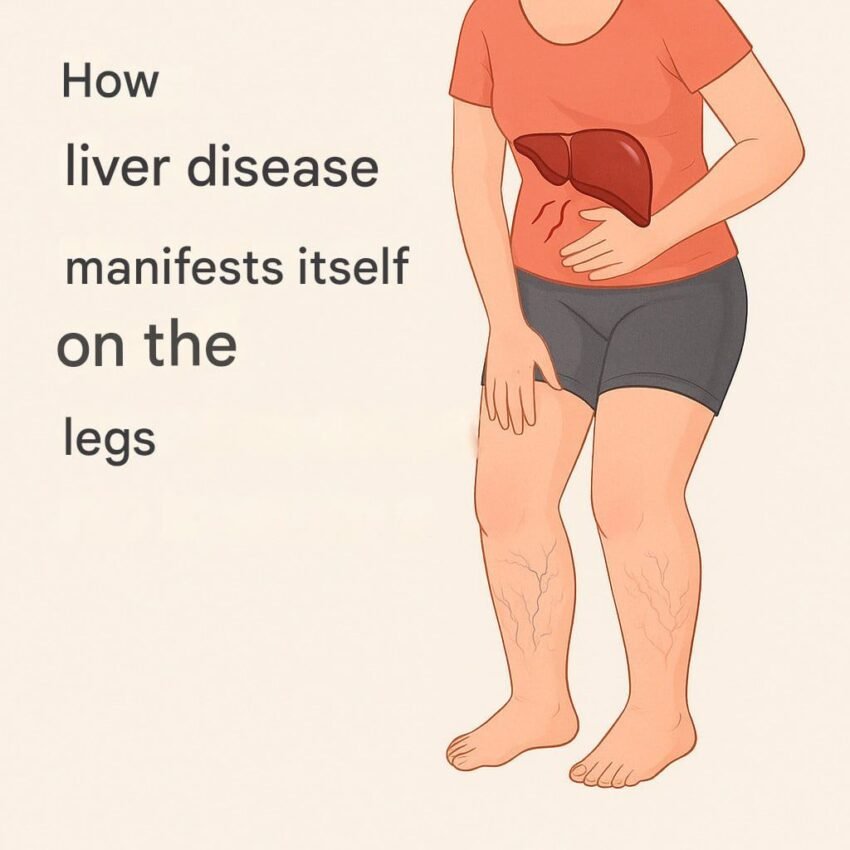
That headline is catchy, but it oversimplifies things. Your legs don’t directly “signal” liver disease—but advanced liver problems can show up in the legs because of fluid balance, circulation, and protein changes in the blood.
Most relevant conditions involve Cirrhosis, where the liver can no longer function properly.
🦵 5 leg-related signs that can be linked to liver disease
1. Swelling in the legs and ankles
- Called edema
- Happens when the liver can’t make enough albumin (a blood protein)
- Fluid leaks into tissues, especially lower legs due to gravity
2. Easy bruising
- Liver produces clotting factors
- When impaired, even minor bumps can cause bruises on legs or elsewhere
3. Itchy skin (especially lower legs)
- Linked to bile buildup in the blood
- Medically related to Pruritus in liver disease
- Often worse at night
4. Muscle wasting or weakness
- Seen in long-term liver disease
- Due to poor nutrition and altered metabolism
5. Visible veins or skin changes
- Spider-like blood vessels may appear (more common on upper body, but circulation changes can affect legs indirectly)
- Skin may look thin or discolored in advanced cases
⚠️ Important reality check
These symptoms:
- Are not specific to liver disease
- Can also come from heart, kidney, vein, or nutrition problems
- Usually appear in more advanced disease, not early stages
🚨 More direct liver warning signs
If liver disease is a concern, stronger indicators include:
- Yellowing of eyes/skin (jaundice)
- Abdominal swelling
- Dark urine or pale stools
- Persistent fatigue or nausea
🧠 Bottom line
Leg symptoms can sometimes reflect liver problems, but they are indirect and non-specific clues, not reliable “warning signals.” The headline exaggerates by making it sound like legs are a direct liver alarm system.
If you want, I can break down early liver disease signs that actually appear before serious damage, which are much more useful than viral symptom lists.
