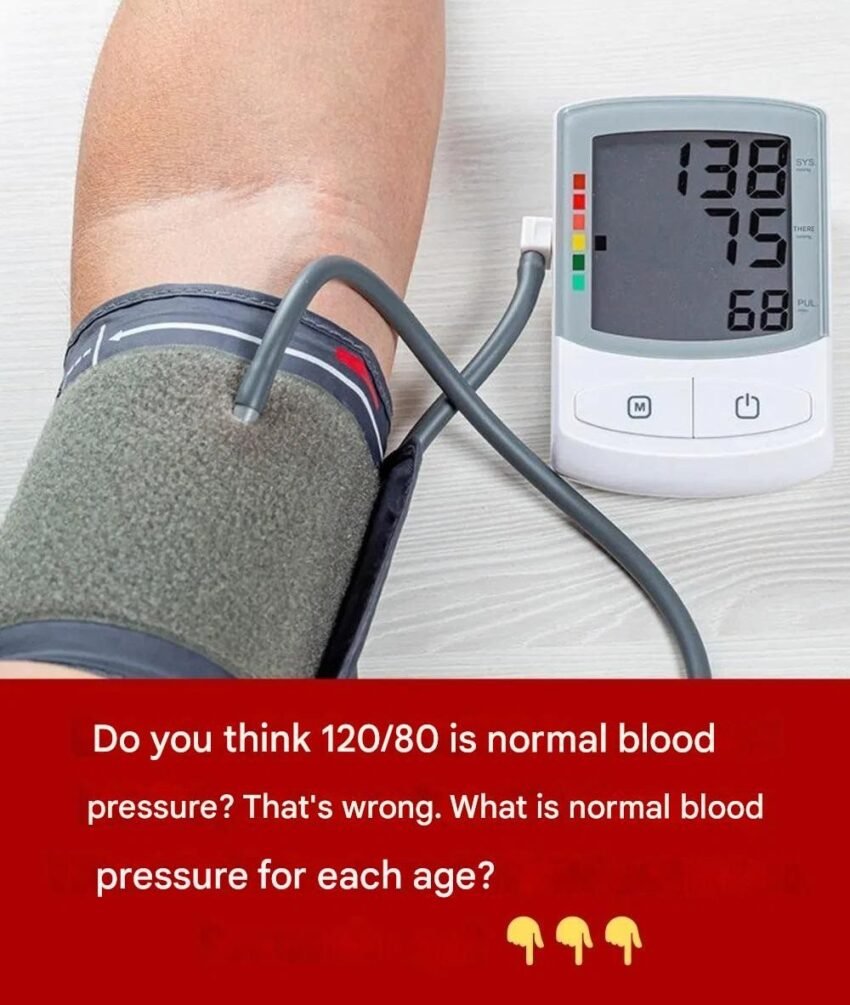
Blood pressure doesn’t have strict “perfect numbers” for every age anymore—modern guidelines focus more on one healthy target for most adults, with small variations depending on children, older age, and individual health.
Here’s a clear breakdown:
🩺 What is blood pressure?
It’s written like 120/80 mmHg:
- Top number = systolic (heart pumping)
- Bottom number = diastolic (heart resting)
🧒 Children (1–12 years)
Normal range varies by height and age:
- примерно 90/60 to 110/70 mmHg
- Doctors use growth charts, not one fixed number
🧑 Teens (13–18 years)
- About 110/70 to 120/80 mmHg
- Similar to adults in older teens
🧑 Adults (18–59 years)
- Normal: below 120/80 mmHg
- Elevated: 120–129 / below 80
- High blood pressure: 130/80 or higher
👴 Older adults (60+ years)
- Often slightly higher due to stiff arteries:
- around 120–140 / 70–90 mmHg
- But many guidelines still aim for:
- below 130/80 if tolerated
⚠️ When it becomes concerning
- Low blood pressure: below ~90/60 (if symptoms like dizziness)
- High blood pressure: consistently 130/80 or above
- Emergency: 180/120 or higher (especially with chest pain, headache, or breathlessness)
🧠 Key takeaway
- There is no perfect “age-by-age magic number”
- The main goal for most people is:
👉 keep it below 120/80 when possible
If you want, I can also show:
- how to lower blood pressure naturally
- or how to measure BP correctly at home for accurate readings 👍
