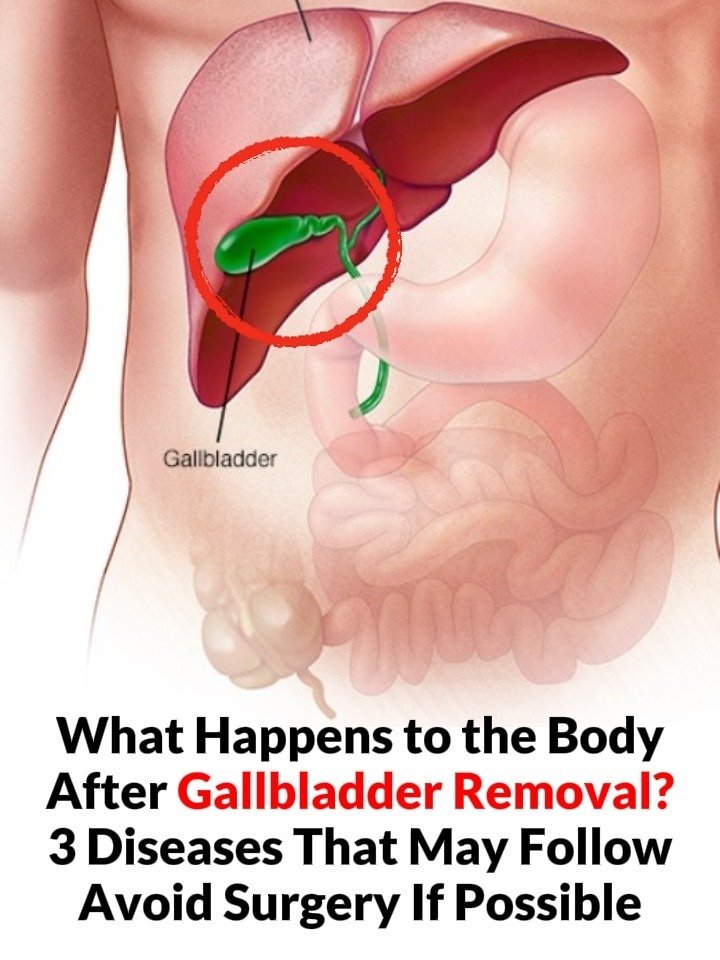
That headline is misleading in a few ways. Gallbladder removal is not something doctors recommend lightly, but when it’s needed (usually for painful or complicated gallstones), it is generally safe and life-improving—not something to “avoid at all costs.”
The surgery is called a Cholecystectomy.
🧠 What the gallbladder does
The gallbladder stores bile (a digestive fluid made by the liver) and releases it when you eat fatty food.
Without it:
- The liver still makes bile
- Bile flows continuously into the intestine instead of being stored
Most people adapt well to this change.
🔄 What happens after gallbladder removal
👍 Most common outcome (majority of people)
- Normal digestion returns after a short adjustment period
- No long-term major health issues
- Relief from pain, nausea, and gallstone attacks
⚠️ Short-term effects (common but temporary)
- Loose stools or diarrhea
- Bloating or gas
- Mild indigestion after fatty meals
These usually improve within weeks to months.
🧾 Conditions sometimes mentioned after surgery (real but uncommon or indirect)
1. Bile reflux or diarrhea
Some people experience bile flowing more continuously into the gut, leading to diarrhea.
2. Post-cholecystectomy syndrome
A small number of patients may have ongoing digestive symptoms after surgery.
3. Digestive sensitivity to fatty foods
The body may take time to adjust to processing fats without bile storage.
❌ What the headline gets wrong
- There are no specific “3 diseases that follow” in a predictable way
- Gallbladder removal does not cause new major diseases in most people
- Avoiding surgery when medically necessary can be dangerous
Untreated gallstones can lead to serious issues like:
- Infection
- Pancreatitis
- Blocked bile ducts
🩺 When surgery is actually recommended
Doctors usually suggest Cholelithiasis removal when there is:
- Repeated pain
- Infection
- Blockage of bile flow
- Pancreas inflammation
🧠 Bottom line
Gallbladder removal is generally safe and effective. Most people return to normal life with minimal long-term effects. The idea that it causes predictable diseases or should always be avoided is not supported by medical evidence.
If you want, I can explain how to eat after gallbladder removal to avoid bloating and diarrhea, which is the most practical concern people actually face.
