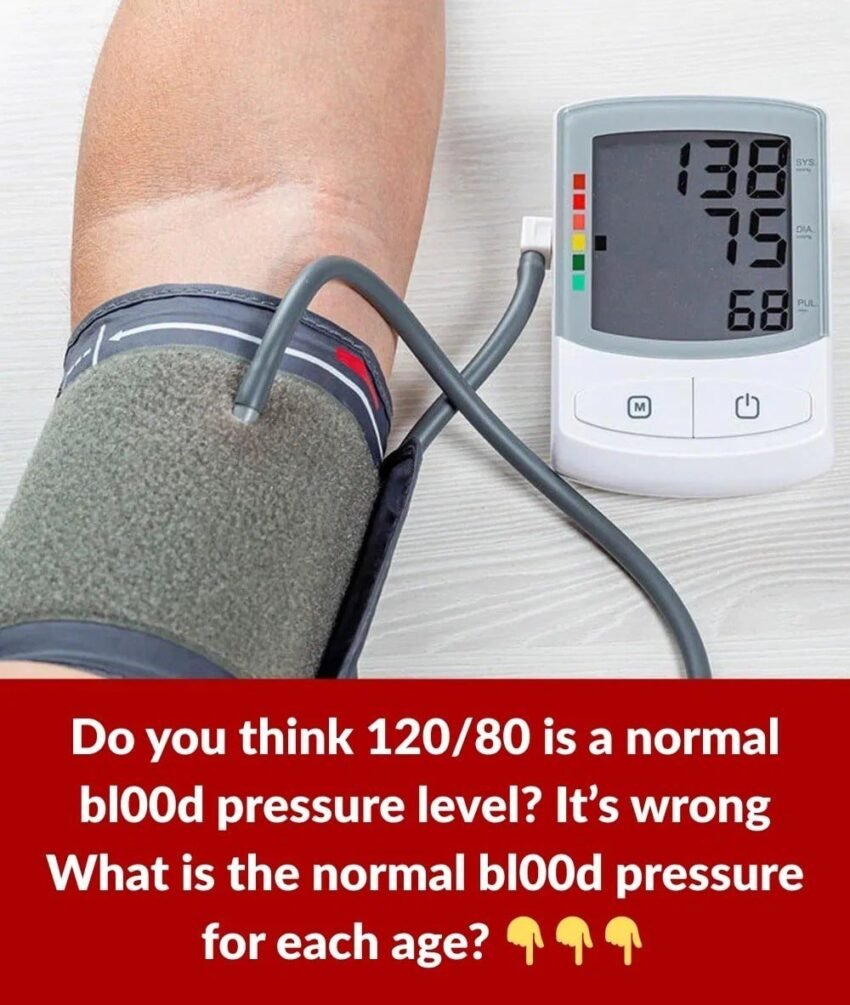
The idea that there’s a different “normal blood pressure for each age” is a common misunderstanding. In modern medicine, normal blood pressure targets are mostly the same for adults, with only slight variation for children and older adults in how doctors interpret risk.
Blood pressure is measured as:
- Systolic (top number) = pressure when heart beats
- Diastolic (bottom number) = pressure when heart rests
🩺 Normal blood pressure (by age group)
👶 Children
Normal varies by height and age, but roughly:
- 90–110 / 50–70 mmHg is typical
Doctors use percentile charts rather than fixed numbers.
🧒 Teens (13–17 years)
- Around 110–120 / 60–80 mmHg
🧑 Adults (18–59 years)
- Normal: below 120 / 80 mmHg
- Elevated: 120–129 / below 80
- High blood pressure: 130/80 or higher (classified as Hypertension when persistent)
👴 Older adults (60+ years)
- Often considered acceptable: up to ~130–139 / 80–89 mmHg depending on health
- Many guidelines still aim for below 130/80 if tolerated
Doctors may allow slightly higher values in older people to avoid dizziness or falls from overly low pressure.
⚠️ What matters more than age
Instead of age alone, doctors focus on:
- Heart disease risk
- Diabetes
- Kidney health
- Stroke history
- Symptoms (dizziness, chest pain, etc.)
🚨 When blood pressure is concerning
- Low: below 90/60 (if symptomatic)
- High: consistently ≥130/80
- Dangerous emergency: ≥180/120
🧠 Key takeaway
There is no “perfect number that rises with age” anymore. The healthiest target for most people is still:
Around 120/80 mmHg or lower
If you want, I can also show you how to correctly measure blood pressure at home or explain why readings change throughout the day.
