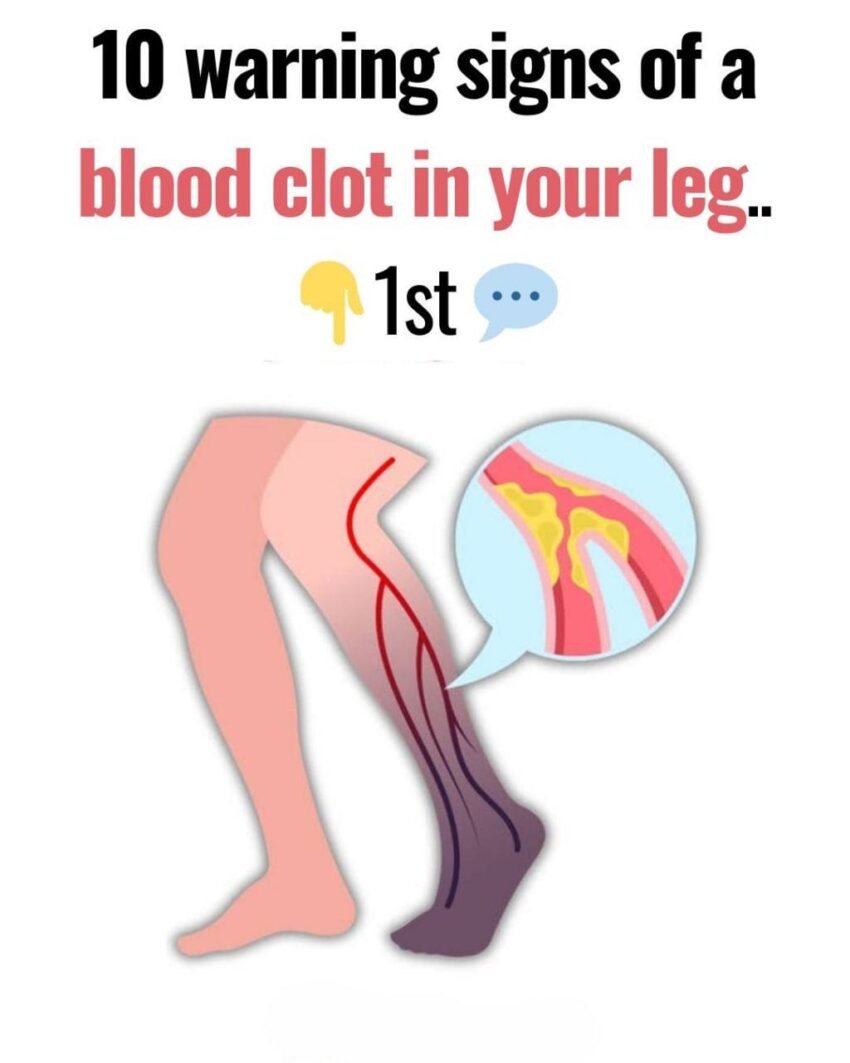
This headline is partly based on real medicine, but it’s written in an exaggerated way.
A dangerous condition called Deep vein thrombosis (DVT) can develop in the legs and sometimes lead to a serious complication if untreated. But it does not always “strike without warning,” and symptoms are often present—just sometimes subtle.
🦵 Early warning signs of DVT (important to know)
1. 🦵 Swelling in one leg
- Usually sudden or unexplained
- One leg looks bigger than the other
2. 💢 Pain or tenderness
- Often in calf or thigh
- May feel like cramp or soreness
3. 🔴 Red or discolored skin
- Skin may look reddish or bluish
🌡️ 4. Warmth in the affected area
- One leg feels warmer than the other
🦶 5. Heaviness in the leg
- Feeling of pressure or tightness
🩸 6. Visible surface veins
- Veins may look more prominent
🚶 7. Pain when walking or standing
- Discomfort increases with movement
⚠️ 8. Sudden worsening symptoms
- Rapid increase in swelling or pain
😮💨 9. Shortness of breath (danger sign)
- May indicate clot has moved to lungs (Pulmonary embolism)
- This is a medical emergency
💓 10. Chest pain or coughing blood (emergency)
- Requires immediate hospital care
🚨 When to seek urgent help
Get medical attention immediately if:
- One leg suddenly swells or hurts
- You have breathing difficulty or chest pain
- Symptoms appear after long travel, surgery, or immobility
🧠 Who is at higher risk
- Long periods of sitting (travel, bed rest)
- Recent surgery or injury
- Smoking
- Obesity
- Certain medical conditions or medications
🛡️ Simple prevention tips
- Move regularly during long sitting
- Stay hydrated
- Walk daily
- Avoid smoking
- Follow medical advice after surgery
🧾 Bottom line
DVT is a serious but often preventable condition. It doesn’t always appear “without warning,” and recognizing early leg symptoms can help prevent complications.
If you want, I can also explain:
- 🦵 DVT vs muscle cramps vs varicose veins
- ✈️ How to prevent clots during long flights
- 💊 Treatment options doctors use 👍
