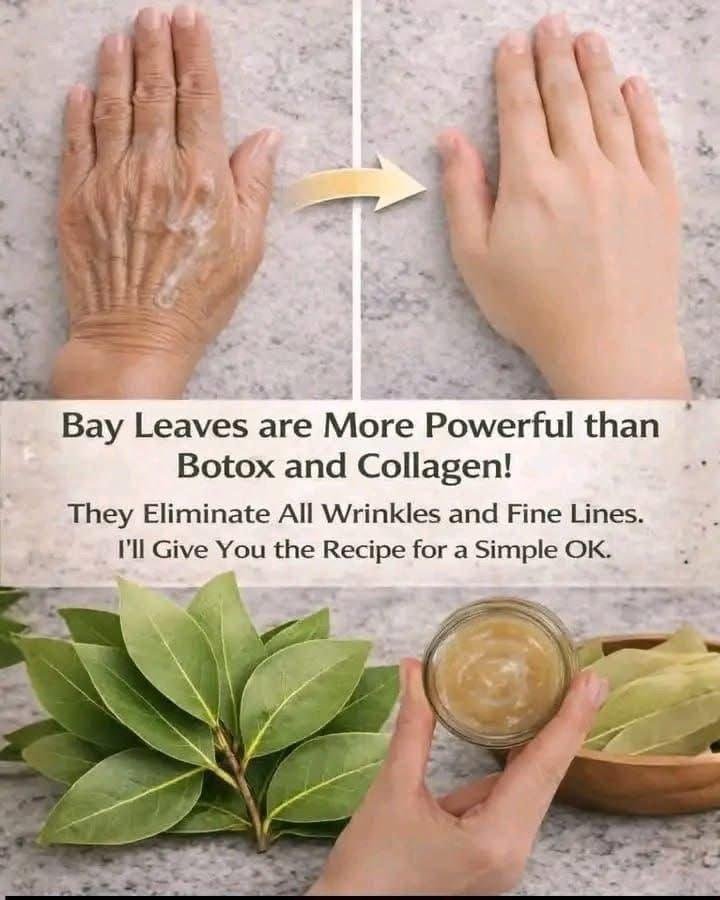
That kind of line makes it sound like Bay leaves have some hidden cosmetic power—but the reality is much more modest.
They’re useful in the kitchen and may offer mild skin or hair benefits, but they’re not a miracle “beauty secret.”
🌿 What bay leaves actually contain
Bay leaves have:
- Antioxidants
- Mild anti-inflammatory compounds
- Essential oils (like eugenol)
👉 These can support skin health indirectly, but effects are mild.
💆♀️ Common “beauty uses” (with reality check)
1) Skin toner / rinse
- Boiled bay leaf water is sometimes used as a face rinse
- May help reduce oiliness slightly
👉 But it won’t treat acne or lighten skin dramatically
2) Hair rinse
- Used as a scalp rinse after boiling and cooling
- May help with:
- Mild dandruff
- Scalp freshness
👉 Effects are subtle and not clinically proven
3) Anti-aging claims
- Antioxidants can help protect skin from damage
👉 But this is not comparable to proven skincare like retinoids or sunscreen
⚠️ Things to be careful about
- Can irritate sensitive skin → always patch test
- Don’t apply strong or concentrated extracts directly
- Avoid getting it in eyes
- Not a substitute for medical treatment
🧠 Why it gets overhyped
Natural ingredients often get labeled as:
- “Ancient secret”
- “Used for centuries”
- “Chemical-free miracle”
👉 But “natural” doesn’t mean powerful or effective for major skin concerns.
👍 Where bay leaves actually shine
- Flavoring soups, rice, curries
- Supporting general antioxidant intake in diet
- Mild home care for scalp or skin freshness
🧾 Bottom line
Bay leaves can offer small, supportive beauty benefits, but they won’t transform your skin or hair. Think of them as a gentle add-on, not a solution.
If you want, I can show you:
- 🌿 A safe DIY bay leaf rinse recipe
- Or compare natural remedies vs proven skincare (what actually works)
