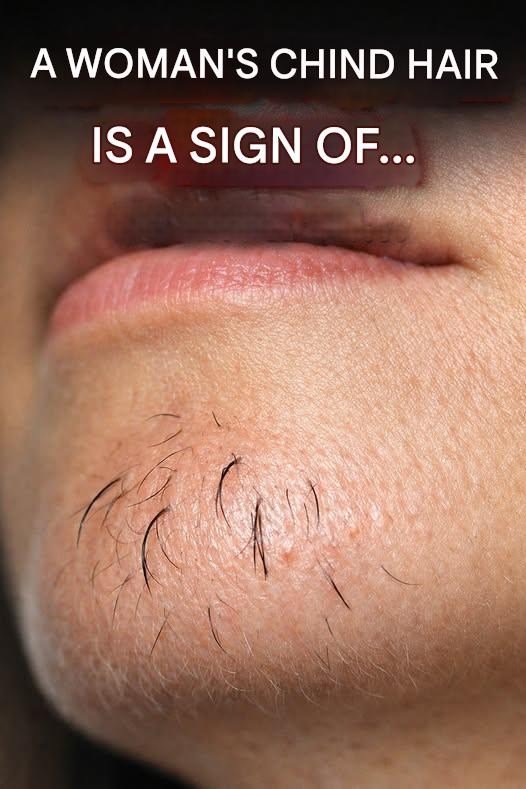
That kind of teaser (“A woman’s chin hair is a sign of…”) is usually designed to spark anxiety. In reality, chin hair in women is common and usually harmless, but sometimes it can point to underlying hormone changes.
Here’s what it can mean:
👩🦰 Chin hair in women — what it really indicates
1) Normal genetics (most common)
Hirsutism is often just mild and normal:
- Family tendency for thicker or darker facial hair
- Ethnic variation (some groups naturally have more facial hair)
- Age-related changes
👉 In many cases, it’s not a medical problem at all.
2) Hormonal changes (androgens)
Small increases in male-type hormones can cause:
- Chin hair
- Upper lip hair
- Slightly coarser facial hair
This can happen with:
- Aging (especially after 40–50)
- Perimenopause or menopause
- Natural hormone fluctuations
3) Polycystic ovary syndrome (PCOS)
One of the more well-known medical causes is:
Polycystic ovary syndrome
Possible signs include:
- Chin or facial hair growth
- Irregular periods
- Acne
- Weight gain or difficulty losing weight
👉 This is common and treatable, but needs medical evaluation if symptoms cluster together.
4) Medications (less common)
Some drugs can increase hair growth, such as:
- Certain steroids
- Some hormone-related medications
5) Rare endocrine conditions
In uncommon cases, it may relate to:
- Adrenal gland issues
- Thyroid imbalance
- Excess androgen production
⚠️ When to actually pay attention
See a doctor if chin hair comes with:
- Sudden rapid increase in facial/body hair
- Irregular or missed periods
- Severe acne
- Deepening voice or other “masculinizing” changes
🧠 Bottom line
- A few chin hairs are usually normal and harmless
- Most cases are due to genetics or natural hormonal changes
- Only in combination with other symptoms does it suggest a medical condition like PCOS
If you want, I can explain:
- Safe ways to remove facial hair (home vs salon vs medical)
- How to tell normal hair growth vs PCOS-related hair
- Or natural ways to manage hormone balance safely
