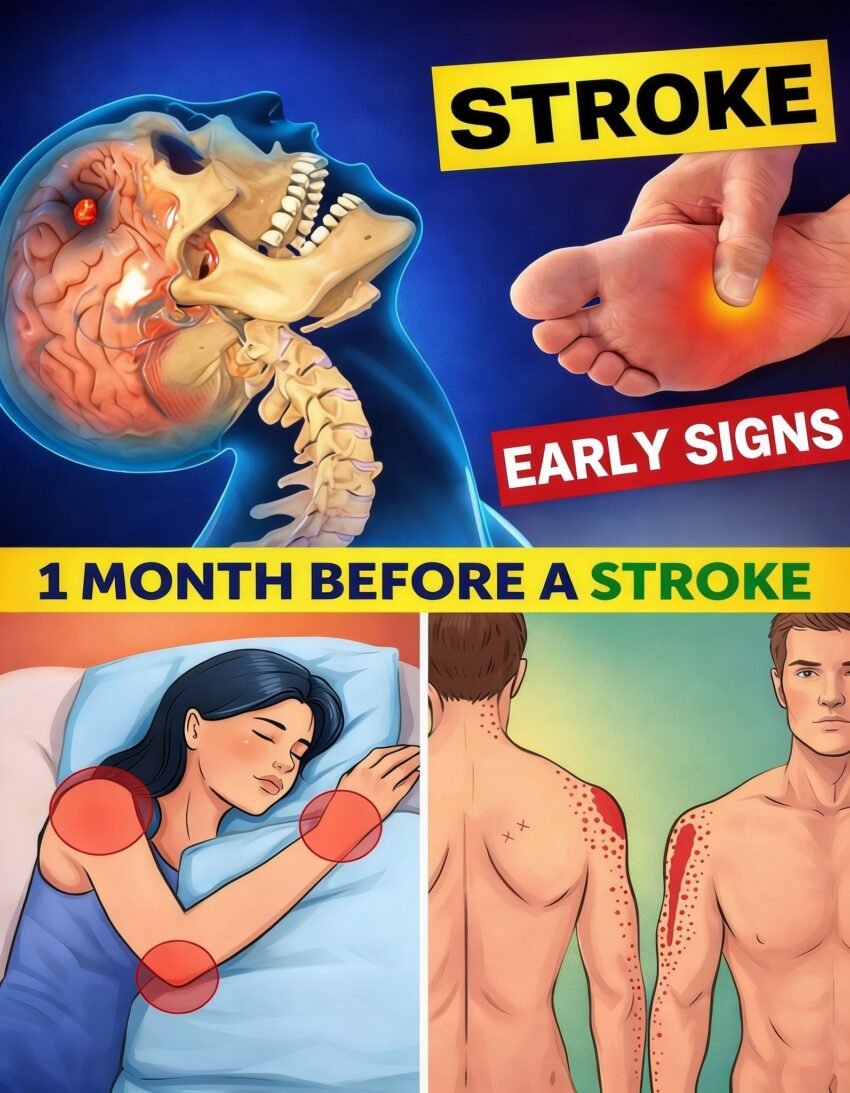
That headline is partially based on real ideas, but it’s also misleading in how confidently it suggests a predictable “one month warning.” A stroke can sometimes be preceded by early warning events, but many happen suddenly.
A key concept here is a Transient Ischemic Attack, often called a “mini-stroke.” These can occur days or weeks before a full stroke and are an important warning sign—but not everyone experiences them.
⚠️ Possible early warning signs (days to weeks before a stroke)
These may appear temporarily and then disappear:
1. Sudden weakness or numbness (one side of body)
Face, arm, or leg may feel weak or heavy.
2. Brief speech problems
Slurred speech, trouble finding words, or confusion.
3. Short episodes of vision loss or blurring
In one or both eyes.
4. Sudden dizziness or loss of balance
Feeling unsteady or clumsy.
5. Unexplained severe headache
More concerning if sudden and unusual.
6. Brief confusion or memory issues
Especially if it comes and goes.
7. Tingling sensations on one side
Often temporary and not clearly explained.
8. Sudden trouble walking
Even if it improves later.
🧠 Important reality check
- These signs do NOT reliably appear one month before a stroke
- They may occur hours, days, or not at all before a stroke
- A TIA is the strongest warning signal—but still unpredictable
🛡️ 9 evidence-based ways to reduce stroke risk
1. Control blood pressure
High blood pressure is the #1 risk factor.
2. Manage diabetes
High blood sugar damages blood vessels over time.
3. Lower cholesterol
Reduces artery blockage risk.
4. Stop smoking
Smoking significantly increases clot risk.
5. Stay physically active
Improves circulation and heart health.
6. Eat a heart-healthy diet
Focus on fruits, vegetables, whole grains, lean protein.
7. Maintain a healthy weight
Reduces strain on the cardiovascular system.
8. Limit alcohol
Excess intake increases stroke risk.
9. Treat heart rhythm problems
Especially Atrial Fibrillation, which can cause clots that lead to stroke.
🚨 When to treat it as an emergency
Use the FAST test:
- Face drooping
- Arm weakness
- Speech difficulty
- Time to call emergency services
Bottom line
There is no guaranteed 30-day warning system for stroke. Some people experience TIAs beforehand, but many strokes occur without clear warning. Prevention and risk control are far more reliable than symptom prediction.
If you want, I can also explain how to tell stroke vs migraine vs anxiety symptoms, which often get confused.
