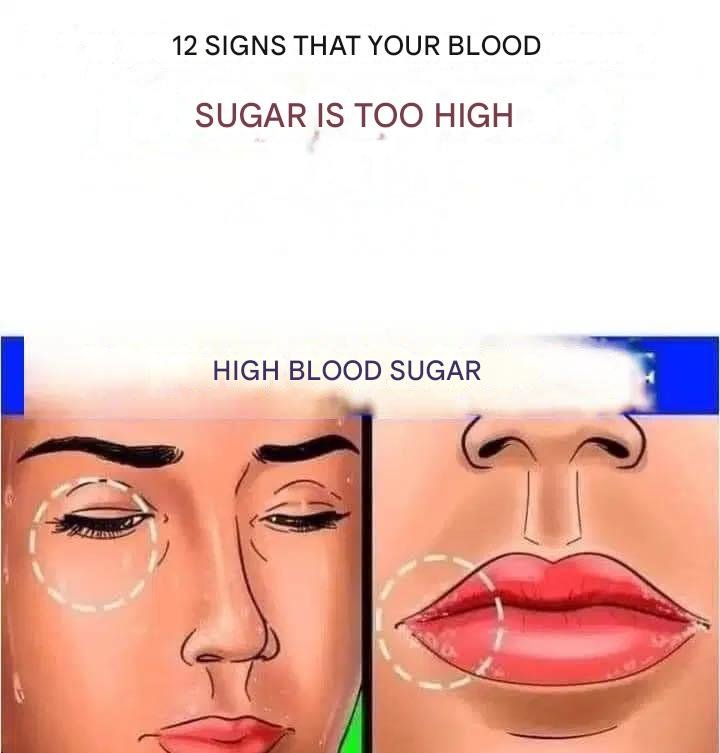
High blood sugar (hyperglycemia) often builds gradually, and the signs can be subtle at first. If it stays elevated, symptoms become more noticeable.
🧠 12 common signs your blood sugar may be too high
- Frequent urination (especially at night)
Your body tries to flush out excess glucose through urine. - Excessive thirst
Losing fluids makes you constantly feel dehydrated. - Increased hunger
Even after eating, your cells aren’t getting enough usable energy. - Fatigue or low energy
Glucose isn’t properly entering cells, leaving you feeling drained. - Blurred vision
High sugar levels can affect the lenses of your eyes. - Headaches
Often linked to dehydration or fluctuating glucose levels. - Slow-healing cuts or wounds
High sugar can impair circulation and immune response. - Frequent infections
Especially skin, gum, or urinary infections. - Dry mouth and itchy skin
Caused by dehydration and poor circulation. - Unexplained weight loss
Seen more often in untreated Type 1 Diabetes - Tingling or numbness in hands and feet
A sign of nerve damage, often linked to Type 2 Diabetes - Darkened skin patches (especially around neck or armpits)
Known as acanthosis nigricans, linked to insulin resistance
⚠️ When it becomes urgent
Seek medical care quickly if you notice:
- Nausea and vomiting
- Shortness of breath
- Fruity-smelling breath
These could signal a serious condition like Diabetic ketoacidosis.
✅ What to do if you notice these signs
- Check your blood sugar if you can
- Reduce sugary/refined foods
- Stay hydrated
- Get medical advice, especially if symptoms persist
Bottom line
Occasional mild symptoms can happen, but persistent or multiple signs together shouldn’t be ignored—they could indicate developing or uncontrolled diabetes.
If you want, tell me your symptoms (or recent diet), and I can help you figure out whether it actually sounds like high blood sugar or something else.
