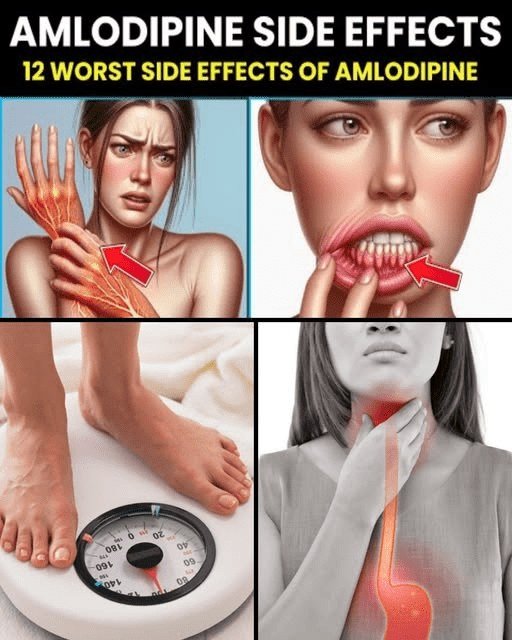
Headlines like that are designed to scare people. Amlodipine is a widely used and generally safe medicine for Hypertension and angina. Most side effects are mild, and serious ones are uncommon—but a few symptoms do deserve attention.
⚠️ Side effects that are real but usually mild
These are common and not usually dangerous:
1. Ankle or leg swelling (edema)
- Most common side effect
- Due to fluid shifting in blood vessels
2. Flushing or warmth
- Temporary redness of face or skin
3. Headache
- Often occurs early in treatment
4. Dizziness
- Especially when starting or increasing dose
5. Fatigue
- Mild tiredness in some users
🚨 Side effects you should NOT ignore
6. Severe swelling
- Sudden or worsening swelling of legs, feet, or hands
- May indicate fluid imbalance needing review
7. Chest pain or worsening angina
- Could signal heart-related issues needing urgent care
8. Irregular heartbeat
- Palpitations or very fast/slow pulse
9. Severe dizziness or fainting
- May suggest blood pressure dropping too low
10. Shortness of breath
- Especially if new or worsening
11. Severe allergic reaction (rare)
- Rash, swelling of face/lips, difficulty breathing
12. Very low blood pressure symptoms
- Confusion, extreme weakness, or collapse
🧠 Important context
- Most people take amlodipine without serious problems
- Side effects are often dose-related and manageable
- Doctors weigh benefits (stroke/heart attack prevention) against risks
🚨 When to seek help immediately
Contact a doctor urgently if you have:
- Chest pain
- Fainting
- Severe swelling or breathing difficulty
- Signs of allergic reaction
🧾 Bottom line
Amlodipine does have side effects, but “never ignore” lists online often exaggerate risk. Most users experience only mild, manageable symptoms, and serious reactions are rare but important to recognize early.
If you want, I can explain how to reduce amlodipine side effects naturally (without stopping the medicine).
