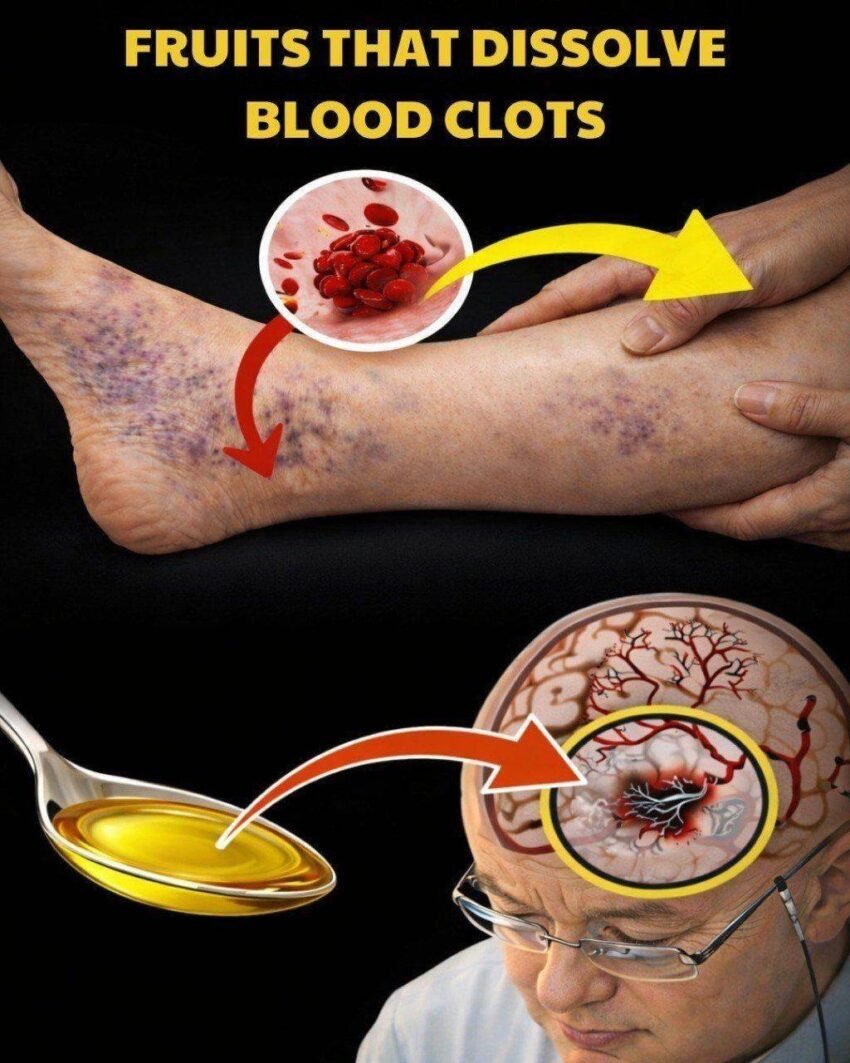
That headline is misleading. No fruit can “dissolve” a blood clot the way medical treatments do. Actual clot-busting is done with medications like Alteplase in emergencies, or blood thinners such as Warfarin under medical supervision.
What fruits can do is support heart and blood vessel health, and in some cases mildly affect clotting factors or inflammation. Here are commonly cited ones—and what they realistically do:
🍓 Fruits that may support healthy circulation
Berries (strawberries, blueberries, raspberries)
Rich in antioxidants and compounds that may reduce inflammation and help blood vessels function better.
🍊 Citrus fruits (oranges, lemons, grapefruit)
Contain vitamin C and flavonoids that support vessel health. Grapefruit can interact with medications, though—important to know.
🍇 Grapes
Especially dark grapes, which contain resveratrol, linked to cardiovascular benefits.
🍍 Pineapple
Contains bromelain, an enzyme sometimes associated with mild anti-inflammatory and blood-thinning effects—but not strong enough to treat clots.
🍉 Watermelon
Provides citrulline, which may help improve blood flow by supporting nitric oxide production.
🍎 Apples
Contain fiber and polyphenols that support overall heart health.
🍒 Cherries
Anti-inflammatory compounds may support circulation.
🍑 Pomegranate
Often highlighted for antioxidant effects and potential benefits for blood vessels.
The reality check
- These foods do not break down existing clots.
- At best, they support cardiovascular health over time.
- Relying on diet alone for clot prevention or treatment can be dangerous.
When it is serious
Conditions like Deep Vein Thrombosis, Pulmonary Embolism, or stroke require urgent medical care.
Bottom line
Eat these fruits because they’re healthy—not because they’re “natural clot dissolvers.” If there’s any concern about blood clots or circulation issues, medical evaluation is essential.
If you want, I can tell you what actually helps prevent clots in a scientifically proven way.
