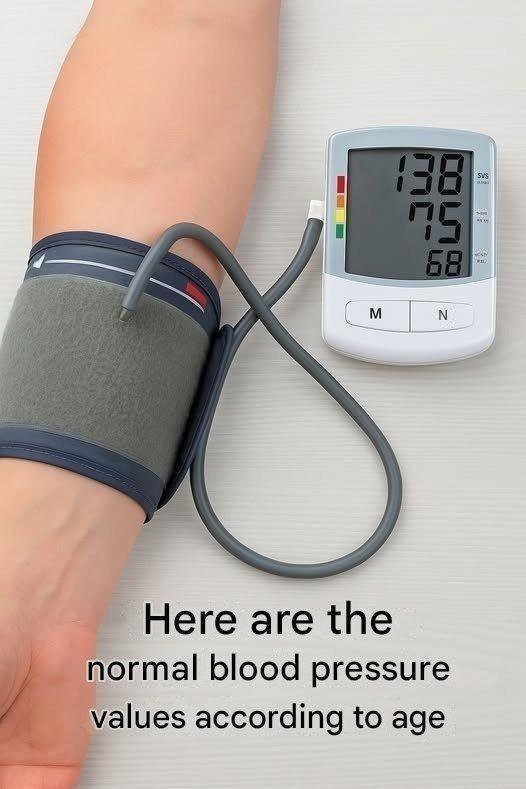
That kind of statement is often misleading. Blood pressure doesn’t have completely different “normal values” for each age group. The same general standards apply to most adults, though doctors may individualize targets.
Blood pressure measures the force of blood against the walls of your arteries, controlled by the Heart and blood vessels.
🩺 Standard blood pressure ranges (adults)
| Category | Systolic (top) | Diastolic (bottom) |
|---|---|---|
| Normal | < 120 | < 80 |
| Elevated | 120–129 | < 80 |
| High (Stage 1) | 130–139 | 80–89 |
| High (Stage 2) | ≥ 140 | ≥ 90 |
🧠 Does “normal” change with age?
👶 Children & teens
- Yes, ranges vary based on age, height, and sex
- Pediatric charts are used
🧑 Adults (18+)
- The same general targets apply
- However, doctors may allow slightly higher values in older adults depending on health
👴 Older adults
- Blood pressure may rise naturally with age
- Treatment goals are adjusted based on:
- Overall health
- Risk of falls
- Heart disease risk
⚠️ Why viral charts are misleading
Many posts:
- Show higher “normal” values for older people
- Suggest high blood pressure is acceptable with age
👉 In reality, consistently high blood pressure increases risk of:
- Heart disease
- Stroke
- Kidney problems
🧾 Bottom line
There isn’t a completely different “normal blood pressure for every age.” For most adults, around 120/80 mmHg is considered healthy, and higher levels should be monitored regardless of age.
If you want, I can help you:
- 🩺 Understand your own blood pressure reading
- 🥗 Natural ways to lower blood pressure
- 🚶 Daily habits that protect heart health 👍
