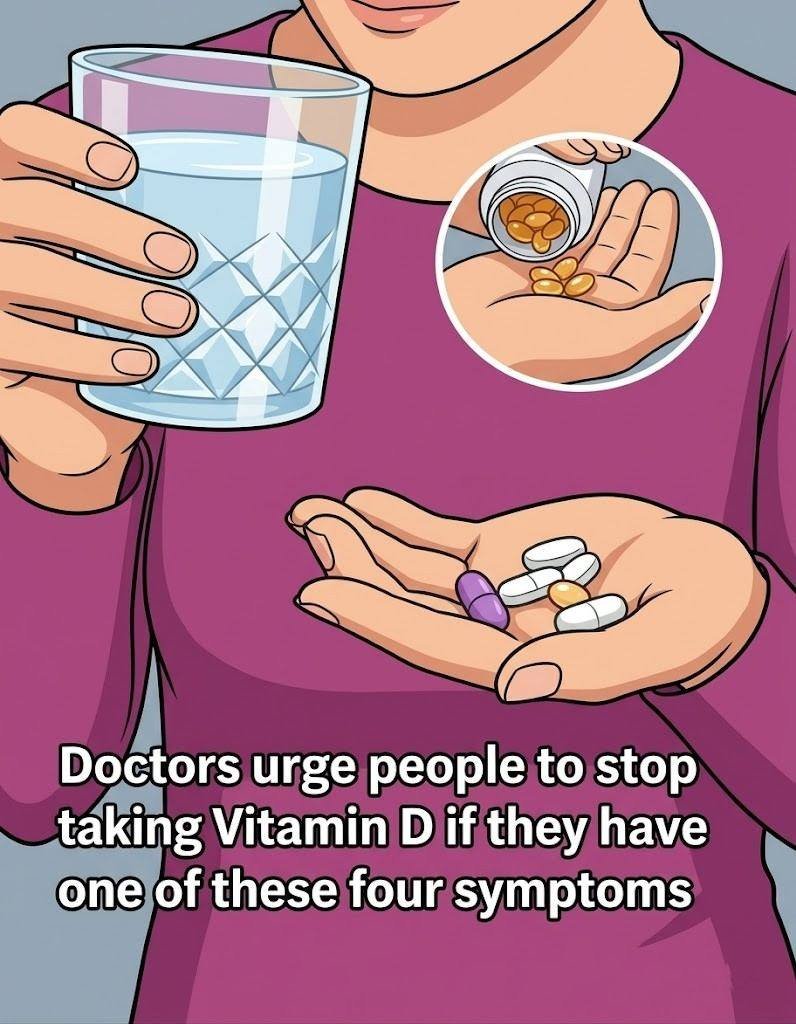
That headline is misleading and alarmist. Doctors do not generally tell people to “stop vitamin D immediately” based on vague symptom lists. Vitamin D is safe at recommended doses, and problems usually only occur with excessive supplementation over time, not normal use.
☀️ What vitamin D actually does
Vitamin D helps:
- Absorb calcium for strong bones
- Support muscle function
- Support immune health
It’s naturally made in skin and regulated by the body.
⚠️ When vitamin D can become a problem
Issues usually happen from too much supplement intake, leading to high calcium levels (hypercalcemia).
This is rare and usually caused by:
- High-dose supplements taken for long periods
- Not medical supervision
🚨 Real symptoms of too much vitamin D (hypercalcemia)
🤢 1. Nausea or vomiting
- Loss of appetite
- Stomach discomfort
🚽 2. Frequent urination and thirst
- High calcium affects kidneys
Related organ: Kidneys
🧠 3. Confusion or weakness
- Feeling foggy or unusually tired
- Muscle weakness
💓 4. Irregular heartbeat (in severe cases)
- Calcium imbalance can affect heart rhythm
⚠️ Important reality check
- These symptoms are not specific to vitamin D alone
- Many illnesses can cause the same signs
- Most people taking normal doses will never experience toxicity
🧪 Safe vitamin D use (general guidance)
- Typical daily needs: ~600–2000 IU (varies by age and health)
- Toxicity usually occurs only at very high long-term doses (e.g., tens of thousands IU daily without supervision)
- Blood testing is the safest way to guide dosing
🧾 Bottom line
There is no universal rule to “stop vitamin D immediately” based on 4 symptoms. True vitamin D toxicity is rare, dose-dependent, and confirmed with blood tests—not social media symptom lists.
If you want, I can explain:
- ☀️ Safe vitamin D dosage for different ages
- 🧪 Signs of deficiency vs excess
- 🥗 Natural ways to improve vitamin D levels 👍
