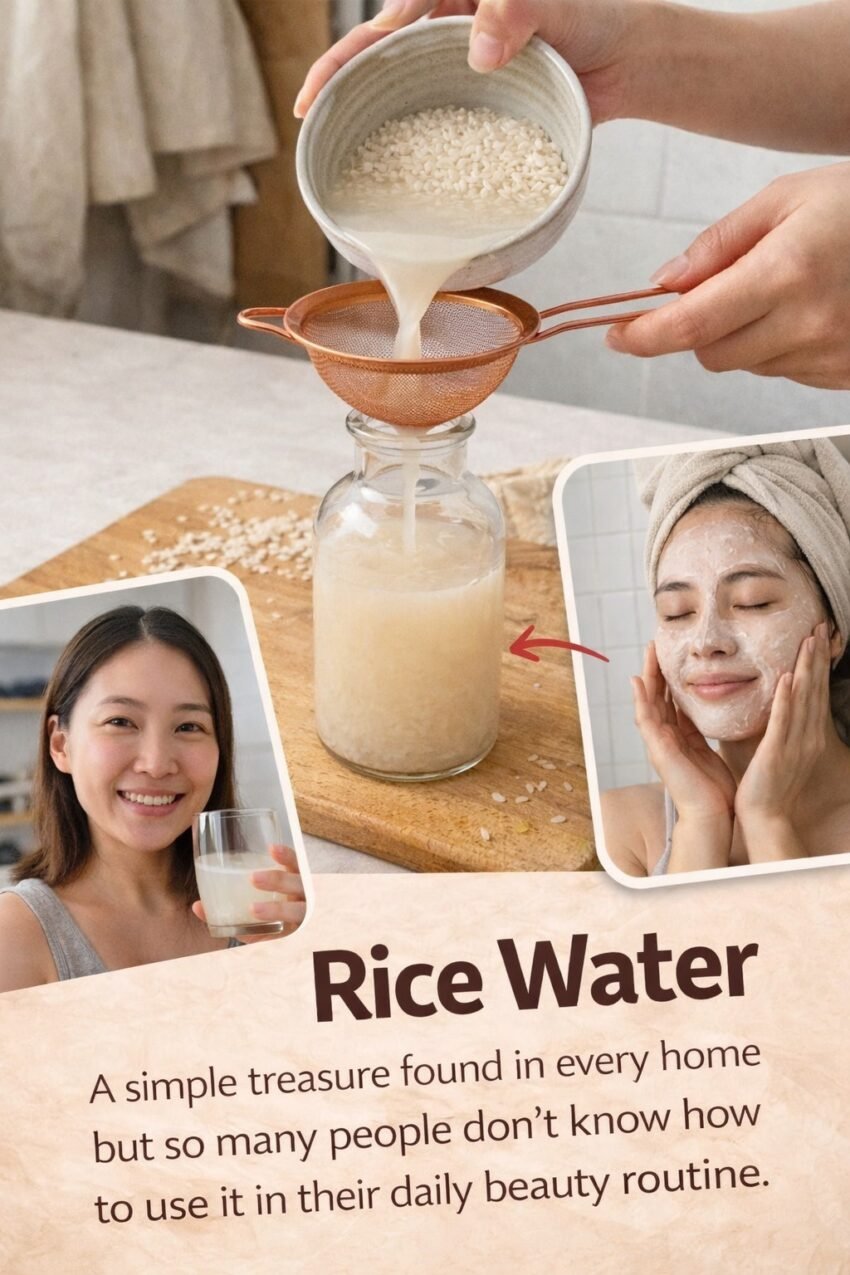
That claim is exaggerated. Rice water is simply the starchy water left after soaking or boiling rice. It’s not “gold,” but it does have a few practical uses—mostly for hair, skin, and plants—though benefits are often overstated online.
💧 What rice water actually is
- Water left after soaking or cooking rice
- Contains small amounts of starch, vitamins, and minerals
- Traditionally used in some cultures for beauty and household purposes
🌿 Possible uses (with realistic expectations)
💇♀️ 1. Hair rinse (most popular use)
- May make hair feel smoother or softer
- Starch can coat hair slightly, reducing frizz
- Evidence for strong hair growth is limited
🧴 2. Skin rinse (mild soothing effect)
- Can feel calming on irritated skin
- May slightly reduce dryness
- Not a treatment for skin conditions
🪴 3. Plant fertilizer (light use)
- Diluted rice water can provide small nutrients to soil
- Overuse may attract insects or cause mold
🧼 4. Household cleaning (minor use)
- Slight starch content can help with light cleaning or polishing
- Not a substitute for proper cleaners
⚠️ What rice water does NOT do
- ❌ Does not “reverse aging”
- ❌ Does not regrow hair significantly
- ❌ Does not cure skin diseases
- ❌ Not a miracle health drink
Your body’s detox and nutrient processing is handled by organs like the Liver, not external rinses.
🧠 Why it became popular
- Traditional beauty practices (especially in Asia)
- Viral social media claims
- Temporary smoothing effects that feel like “results”
🧾 Bottom line
Rice water is a simple household byproduct with mild cosmetic and gardening uses, but it is not a powerful “hidden health secret.”
If you want, I can show you:
- 💇♀️ Real evidence-based hair care tips
- 🧴 Natural skin care routines that actually work
- 🪴 Safe plant fertilizers you can make at home 👍
