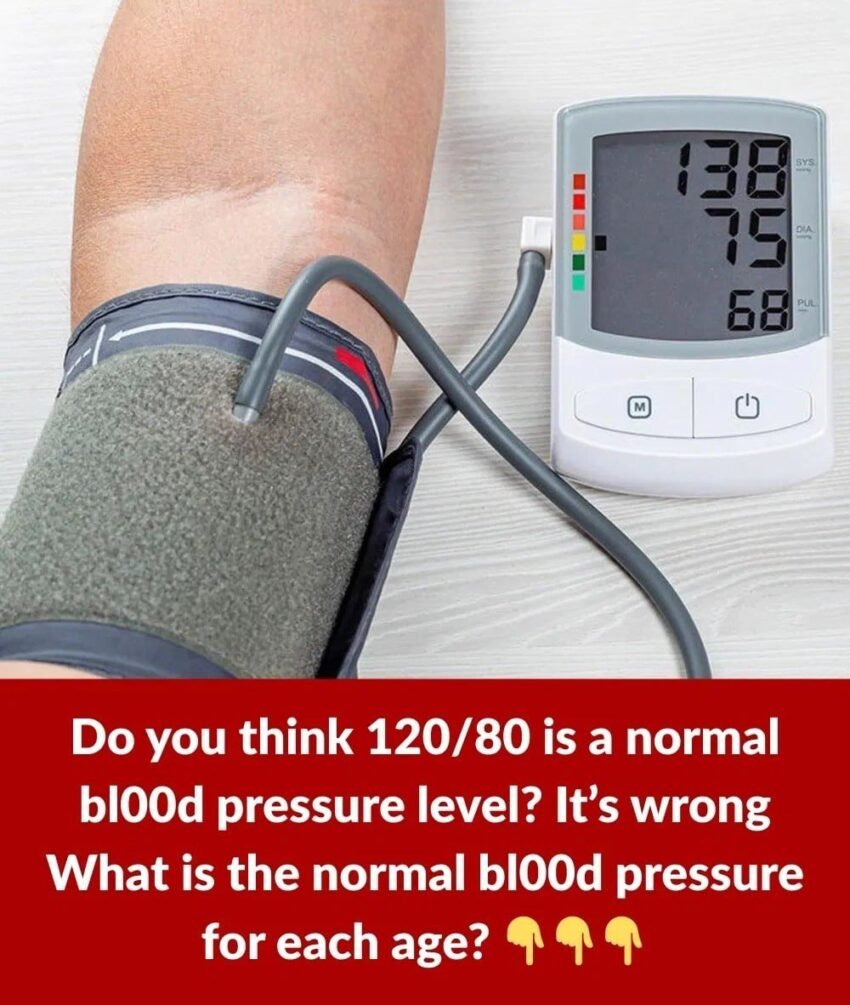
There isn’t a completely different “perfect blood pressure for every age,” but normal ranges can shift slightly as people get older. Doctors mostly use one main standard for adults.
Blood pressure is measured as:
- Systolic (top number) = pressure when the heart beats
- Diastolic (bottom number) = pressure when the heart rests
🫀 Normal blood pressure (general standard)
🧍 Adults (18+)
- Normal: less than 120/80 mmHg
- Elevated: 120–129 / less than 80
- High (Hypertension): 130/80 or higher
This applies to most adults regardless of age.
👶👦 Blood pressure by age (typical ranges)
👶 Children (1–12 years)
- Usually lower than adults
- Rough range: 90/60 to 110/70
🧑 Teenagers (13–17 years)
- Similar to adults but slightly lower
- Rough range: 100/60 to 120/80
🧑🦱 Young adults (18–39 years)
- Ideal: around 110/70 to 120/80
🧑🦳 Middle-aged adults (40–59 years)
- Still aim for: below 120/80
- Many start seeing slight increases
🧓 Seniors (60+ years)
- Doctors often accept slightly higher readings
- Common target: below 130/80
- Some individuals may run a bit higher depending on health conditions
⚠️ Important reality check
Even in older age:
- “Normal” is still generally below 130/80
- High blood pressure is not a normal part of aging, even though it becomes more common
High blood pressure is called Hypertension.
🚨 When blood pressure is dangerous
- 140/90 or higher (persistent) → hypertension
- 180/120 or higher → medical emergency
🧠 Why this matters
High blood pressure can silently damage:
- Heart
- Brain
- Kidneys (part of the Kidneys)
🧾 Bottom line
There isn’t a different “perfect number” for each age—120/80 or lower is ideal for most adults, and anything consistently above 130/80 should be monitored.
If you want, I can also explain:
- 🩺 How to lower blood pressure naturally
- 🍽️ Best foods for healthy BP
- 📊 How to correctly measure BP at home 👍
