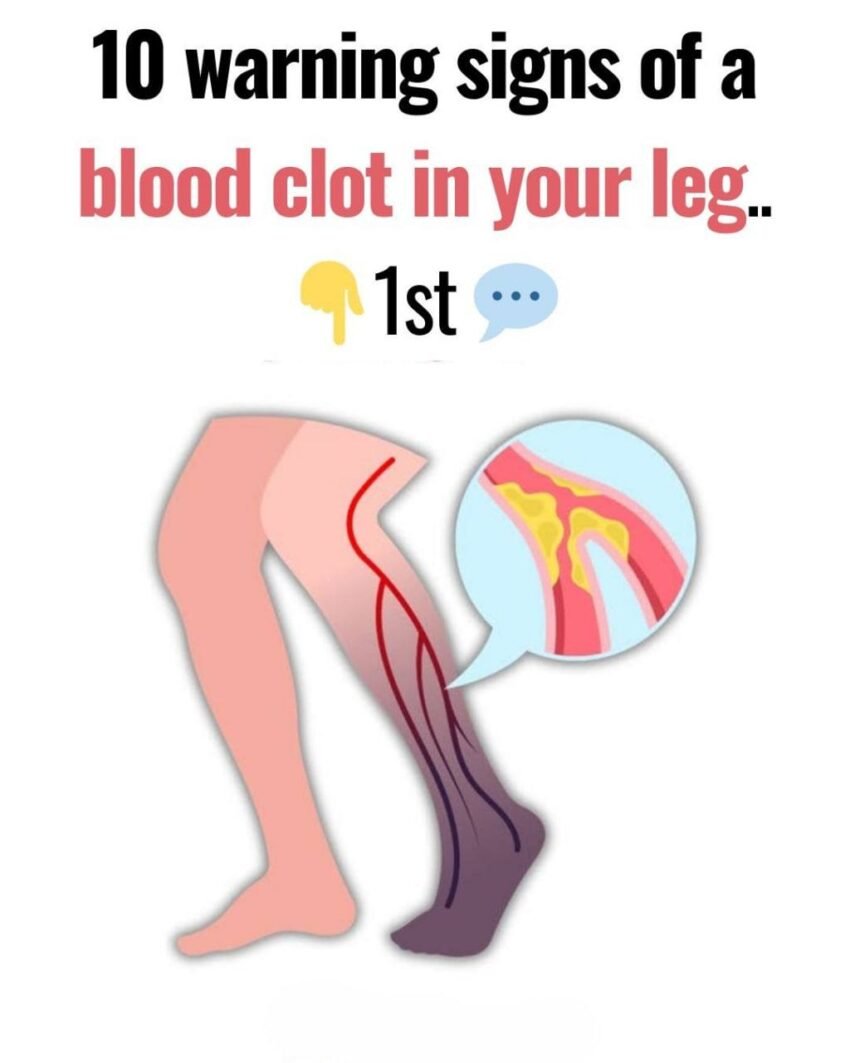
That statement has a grain of truth but is exaggerated. Blood clots in the leg—called Deep vein thrombosis (DVT)—can be serious, but they don’t always present with a neat “10-sign checklist,” and sometimes there are no symptoms at all.
What matters is recognizing the most reliable warning signs and acting quickly.
🦵 Common signs of DVT
⚠️ 1. Swelling in one leg
- Usually in the calf or thigh
- One leg noticeably larger than the other
💢 2. Pain or tenderness
- Often starts in the calf
- May feel like a cramp or soreness
🔥 3. Warmth in the affected area
- Skin feels warmer than the other leg
🔴 4. Red or discolored skin
- Reddish or bluish tone
🧍♂️ 5. Pain when walking or standing
- Gets worse with movement
🪶 6. Tight or heavy feeling in the leg
- Not sharp pain, but persistent discomfort
⚠️ 7. Enlarged surface veins
- Veins may look more visible than usual
🚨 Dangerous complication to watch for
A clot can travel to the lungs, causing a Pulmonary embolism, which is life-threatening.
🚑 Emergency symptoms:
- Sudden shortness of breath
- Chest pain (worse with breathing)
- Rapid heart rate
- Coughing (sometimes with blood)
⚠️ Important reality check
- Not everyone with DVT has symptoms
- Symptoms can be mild and mistaken for muscle strain
- Online “10 signs” lists often repeat or exaggerate
🧠 Who is at higher risk
- Long periods of sitting (travel, desk jobs)
- Recent surgery or injury
- Pregnancy
- Smoking
- Obesity
- Certain medical conditions
🧾 Bottom line
DVT is serious, but the key signs are swelling, pain, warmth, and color change in one leg. If you notice these—especially together—don’t ignore them.
If you want, I can show you:
- How to tell DVT vs muscle pain
- Simple ways to reduce clot risk
- Or warning signs based on your lifestyle 👍
