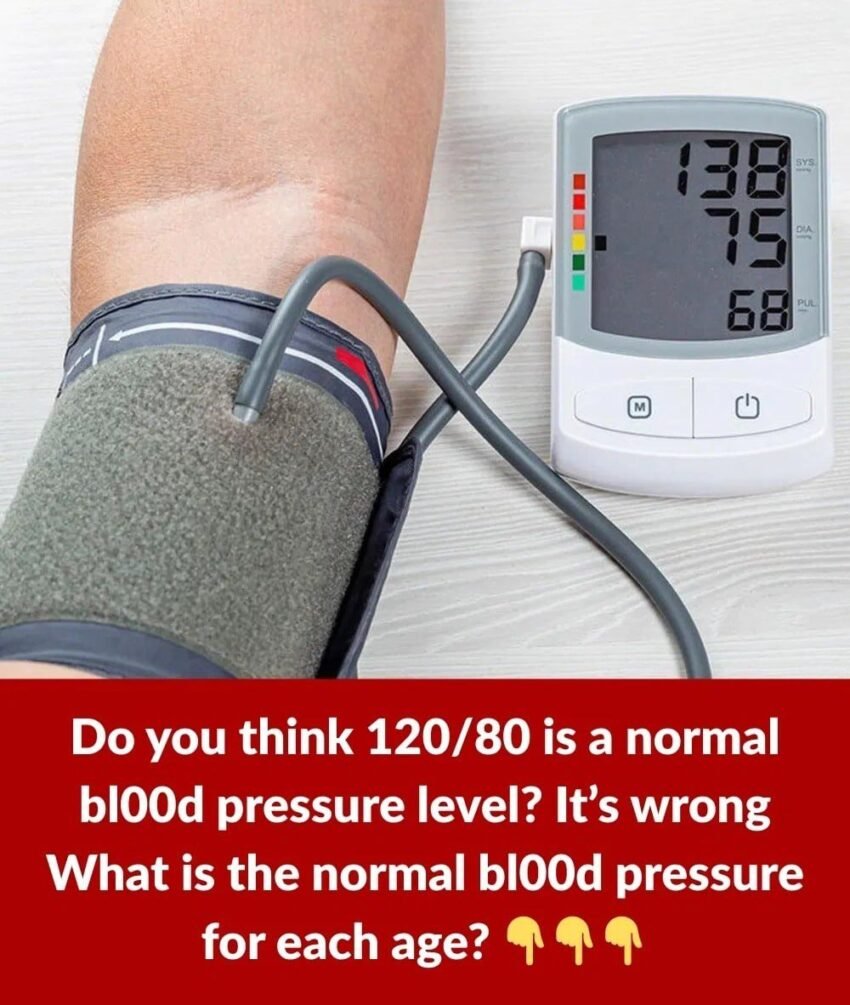
It’s not quite true that “everyone” has made this mistake—blood pressure varies a lot by age, health, and even how it’s measured. But there are general reference ranges doctors use.
Here’s a clear, practical guide:
🧒 Children (1–12 years)
- Normal varies by age, height, and gender, so doctors use charts
- Rough average:
- Systolic: 90–110 mmHg
- Diastolic: 55–75 mmHg
👦 Teenagers (13–17 years)
- Similar to adults as they grow
- Normal: ~100–120 / 60–80 mmHg
🧑 Adults (18–39 years)
- Ideal:
- Around: 90–120 / 60–80 mmHg
- Anything consistently above 120/80 starts to be monitored
🧔 Middle-aged adults (40–59 years)
- Still ideally:
- Below 120/80 mmHg
- Slight increases are common, but not “normal” medically
👴 Older adults (60+ years)
- Target depends on overall health
- Often acceptable:
- Below 130–140 / 80–90 mmHg
- Often acceptable:
- Doctors may allow slightly higher to avoid dizziness/falls
🧠 Important modern guideline (for adults)
According to organizations like the American Heart Association:
- Normal: <120 / <80
- Elevated: 120–129 / <80
- High (Hypertension Stage 1): 130–139 / 80–89
- High (Stage 2): ≥140 / ≥90
⚠️ Key things people often get wrong
- “120/80” is not the only normal—lower can be perfectly healthy
- Blood pressure changes with stress, sleep, caffeine, and activity
- One high reading doesn’t mean you have hypertension
If you want, tell me your age and recent readings—I can help you interpret whether they’re okay or need attention.
