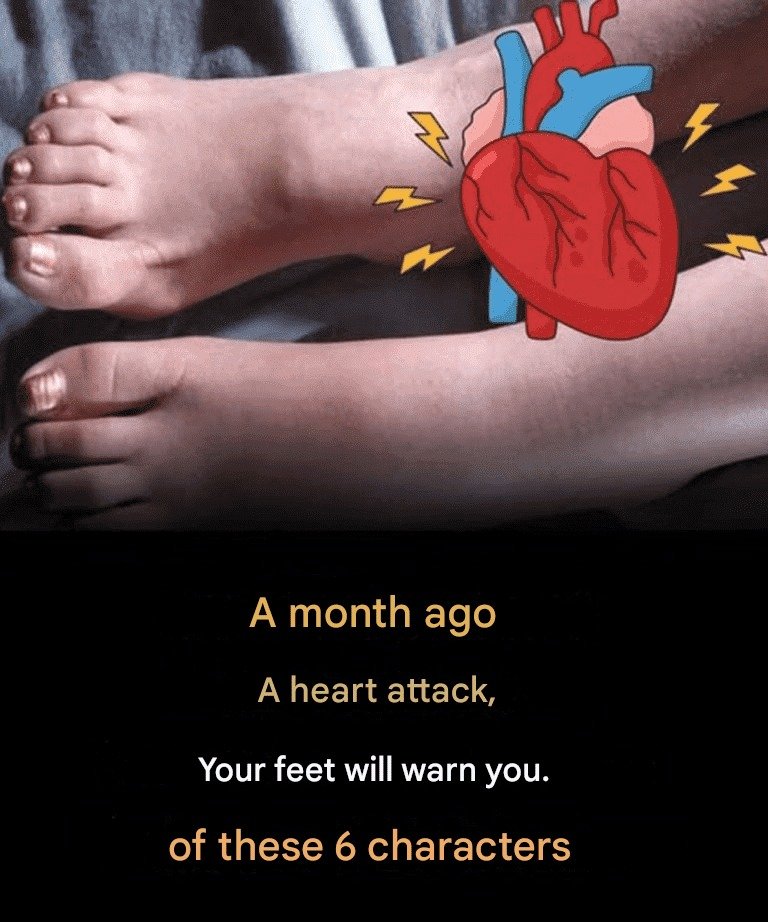
That headline is overstated. There is no reliable set of “foot signs” that can predict a heart attack a month in advance.
However, some leg and foot symptoms can signal poor circulation or heart disease risk, especially when they persist or worsen. These are worth taking seriously.
A heart attack (myocardial infarction) usually develops from gradual artery narrowing, but it doesn’t give a precise “1-month warning timeline.”
🦶 6 foot/leg signs linked to heart or circulation problems
1. Swollen feet or ankles
- Fluid buildup (edema)
- Can suggest heart strain or poor circulation
2. Cold feet or toes
- Reduced blood flow to extremities
- Often linked with peripheral artery disease
3. Pain in legs when walking
- Cramping or heaviness that improves with rest
- Known as “claudication”
- Sign of narrowed arteries
4. Slow-healing wounds on feet
- Cuts or sores that take long to heal
- May indicate poor blood supply or diabetes
5. Skin color changes
- Pale, bluish, or dark discoloration
- Suggests reduced oxygen delivery
6. Numbness or tingling
- Can be nerve-related or circulation-related
- Common in diabetes or vascular disease
⚠️ Important reality check
- These symptoms do NOT specifically predict a heart attack in one month
- They may indicate circulation problems or risk factors
- Many non-heart conditions can cause them (nerve issues, diabetes, varicose veins)
🚨 When to seek urgent care
If foot symptoms come with:
- chest pain
- shortness of breath
- sudden weakness
- dizziness
👉 Seek emergency care immediately.
🧠 Bottom line
Foot changes can be early clues of vascular disease, but they are not a countdown clock to a heart attack. They should be seen as a signal to check heart and circulation health early.
If you want, I can explain:
- real early warning signs of a heart attack
- or how to improve circulation naturally 👍
