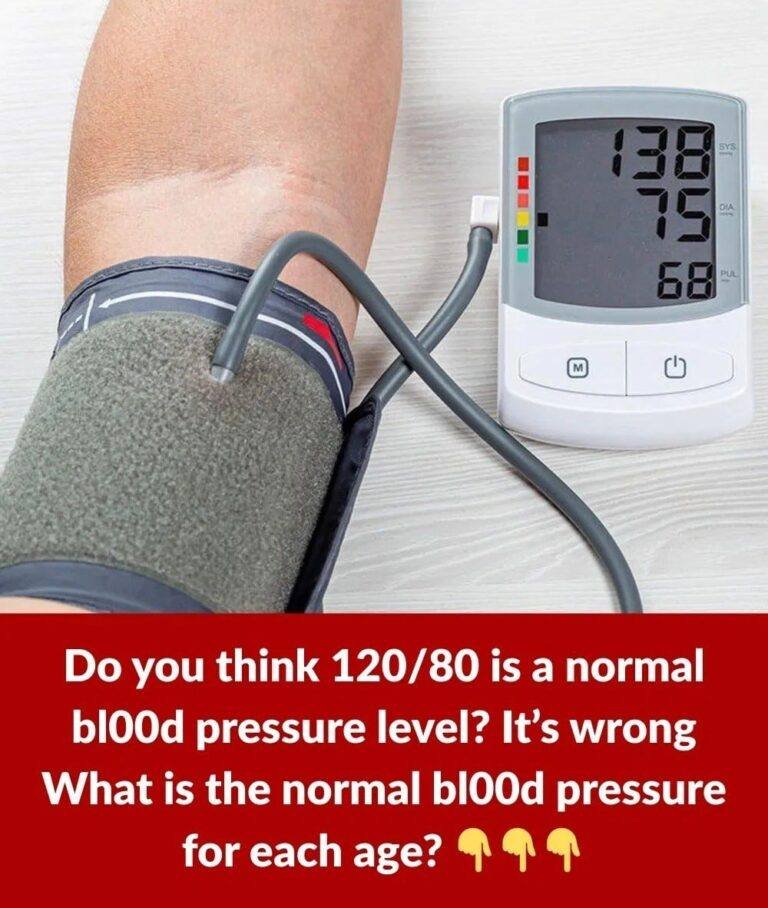
Here’s a clear, practical guide to normal blood pressure by age. Keep in mind: modern medical guidelines don’t strictly change “normal” with age anymore—healthy adults of all ages are generally aimed at the same target range, but averages can vary.
🩺 What is “normal” blood pressure?
Blood pressure is written like 120/80 mmHg:
- Top number (systolic) = pressure when heart beats
- Bottom number (diastolic) = pressure when heart rests
✅ General normal range (most adults)
- Normal: below 120/80 mmHg
- Elevated: 120–129 / below 80
- High blood pressure (hypertension): 130/80 or higher
👶 Blood pressure by age (typical averages)
🧒 Children (1–12 years)
- About 90/60 to 110/70 mmHg
- Varies a lot depending on height and age
🧑 Teenagers (13–18 years)
- Around 110/70 to 120/80 mmHg
🧑💼 Adults (18–39 years)
- Ideal: around 110–120 / 70–80
- Normal target: below 120/80
🧑💼 Middle age (40–59 years)
- Average: 115–130 / 75–85
- Still aim for below 120/80 if healthy
👴 Older adults (60+ years)
- Average: 120–140 / 70–90
- Doctors may accept slightly higher readings depending on health
⚠️ When to worry
- Low BP: below ~90/60 (if symptoms like dizziness or fainting)
- High BP: consistently 130/80 or higher
- Emergency: 180/120 or higher (especially with chest pain, headache, shortness of breath)
🧠 Key takeaway
There is no “perfect number for each age” anymore—instead:
- Aim for under 120/80 if possible
- Focus more on overall health and symptoms, not just age
If you want, I can also show:
- how to naturally lower blood pressure
- foods that help vs raise BP
- or how to properly measure BP at home for accurate readings
