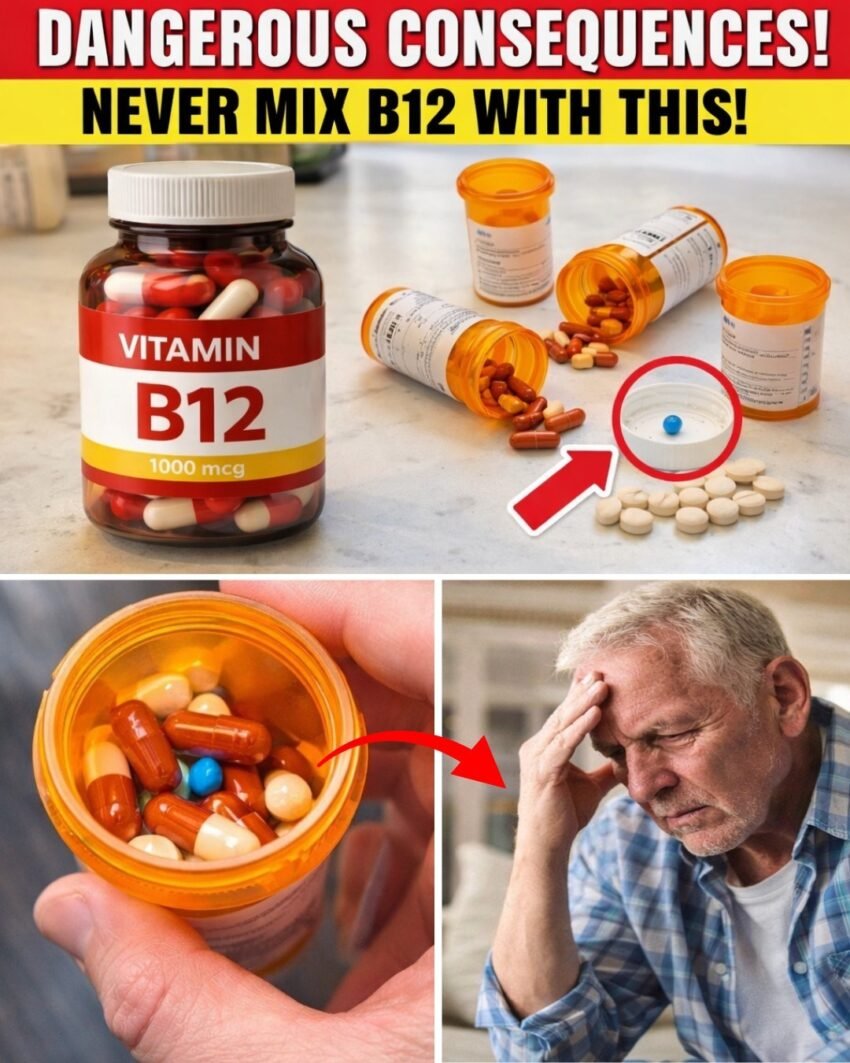
That headline is another classic clickbait-style health claim, and it’s misleading as written.
🧠 What’s true vs what’s exaggerated
❌ “NEVER take B12 with these 2 medications”
There is no universal medical rule that vitamin B12 must be avoided with specific common medications after age 60.
Cardiologists (and medical guidelines) do not issue blanket warnings like this for most people.
💊 What is actually known about B12 interactions
Vitamin B12 is generally very safe, but a few real interactions exist:
1. Metformin (diabetes medication)
- Long-term use of metformin can lower B12 levels
- Doctors sometimes recommend B12 supplements, not avoidance
👉 This is an interaction where B12 is helpful, not dangerous.
2. Acid-reducing medicines (PPIs like omeprazole, or antacids)
- Can slightly reduce B12 absorption over long periods
- Again, doctors may suggest supplementing B12 if needed
🧾 Key point
These medications do not “dangerously react” with B12.
The issue is usually:
⚠️ reduced absorption over time, not harmful interaction.
🧓 What doctors actually advise for people over 60
- B12 absorption naturally decreases with age
- Mild deficiency is more common in older adults
- Supplements are often recommended, not banned
🚫 Why headlines like this spread
They usually:
- Oversimplify complex medical info
- Turn “monitoring needed” into “NEVER take”
- Create fear to get clicks and shares
✅ Bottom line
- ✔ No major medical guideline says “never take B12 with 2 common drugs”
- ✔ Some medicines can reduce B12 absorption (like metformin and PPIs)
- ✔ In most cases, doctors actually encourage B12 monitoring or supplementation
If you want, I can tell you:
- 🧠 Signs of B12 deficiency
- 💊 Safe daily B12 doses
- 🧓 Whether older adults should take it regularly
- ⚠️ Real medication–vitamin interactions that do matter
Just ask 👍
