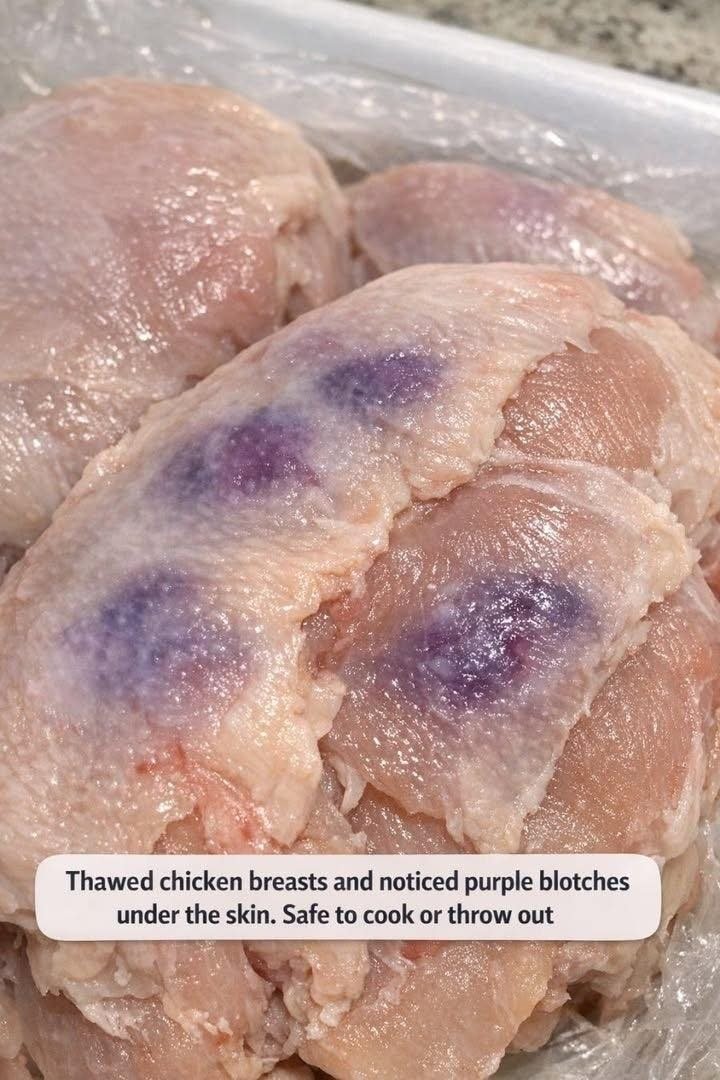
Purple blotches on thawed chicken breast can look alarming, but they’re not always a sign the chicken is unsafe.
🟣 What it usually means
Most commonly, purple or dark patches under chicken skin are:
- Blood pooling/bruising from processing or freezing
- Natural blood vessel discoloration
- Sometimes oxidation in frozen meat
These can look purple, dark red, or grayish.
👍 When it is still safe to cook
It’s generally OK if:
- There is no bad smell (sour, rotten, ammonia-like)
- The texture is normal (not slimy or sticky)
- The chicken is still within its use-by date
- The color is only patchy purple—not widespread green/gray spoilage
👉 In this case, you can cook it fully (to 74°C / 165°F internal temperature).
⚠️ When to throw it out
Do NOT use it if you notice:
- Strong unpleasant odor
- Slimy or sticky surface
- Green, gray, or mold-like discoloration
- Packaging was bloated or leaking before thawing
- You’re unsure how long it was thawed improperly
🧠 Important safety note
Color alone is not a reliable spoilage test. Smell, texture, and storage history matter more.
🍗 Bottom line
- Purple blotches alone = usually safe bruising/blood spots
- If anything else seems off → discard it to be safe
If you want, tell me how it smells/feels and how it was thawed—I can help you make a more confident call.
