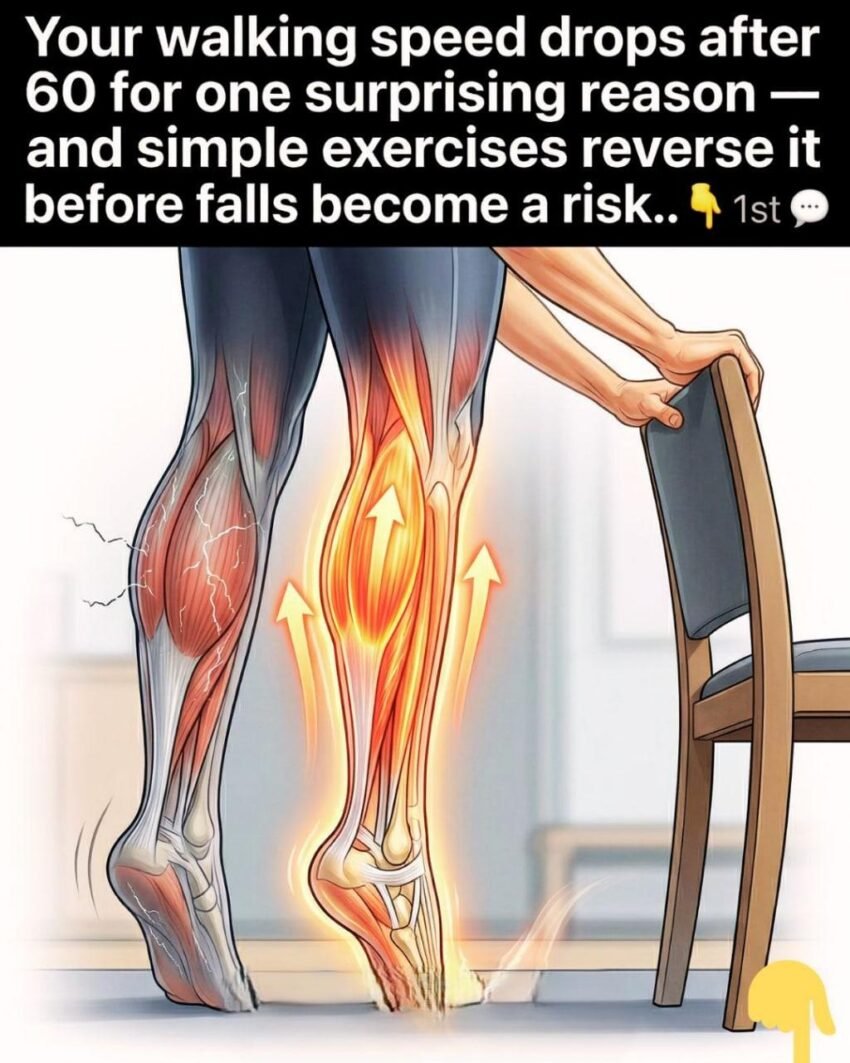
That headline is partly based on real research, but it’s easy to misunderstand it as “slow walking causes problems,” which isn’t quite true.
🚶♂️ What doctors actually mean
Studies on older adults (60+) show that walking speed is a strong “health marker”, not a cause of decline by itself.
People who walk noticeably slower than others their age are more likely to have:
- reduced muscle strength (sarcopenia)
- balance or coordination issues
- early joint problems (knees, hips)
- cardiovascular or neurological conditions
- lower overall physical fitness
So slow walking is often a signal of underlying health changes, not the problem itself.
⚠️ Why it’s linked to falls and independence
A slower walking speed can reflect:
- weaker leg muscles → less stability
- slower reaction time → harder to recover from trips
- reduced endurance → fatigue while moving
- poorer balance control
These factors do increase risk of:
- falls
- hospitalizations
- difficulty with daily tasks over time
🧠 Important nuance doctors emphasize
- Not all slow walkers are “at risk”
- Some people naturally walk slowly but are otherwise healthy
- The trend over time matters more than one moment
👉 A decline in walking speed over months/years is more concerning than being slow in general.
💪 What actually helps (evidence-based)
For older adults, the most effective ways to maintain independence are:
- Strength training (especially legs: squats, chair stands)
- Balance exercises (standing on one leg, heel-to-toe walking)
- Regular walking (even slow walking is beneficial if consistent)
- Vitamin D + protein intake (supports muscles)
- Checking vision and footwear (often overlooked)
🧩 Bottom line
Slow walking after 60 is less a “danger sign” on its own and more a possible early indicator that strength, balance, or health is changing.
If you want, I can break down:
- how to safely improve walking speed at any age
- or simple home exercises to reduce fall risk without going to a gym
