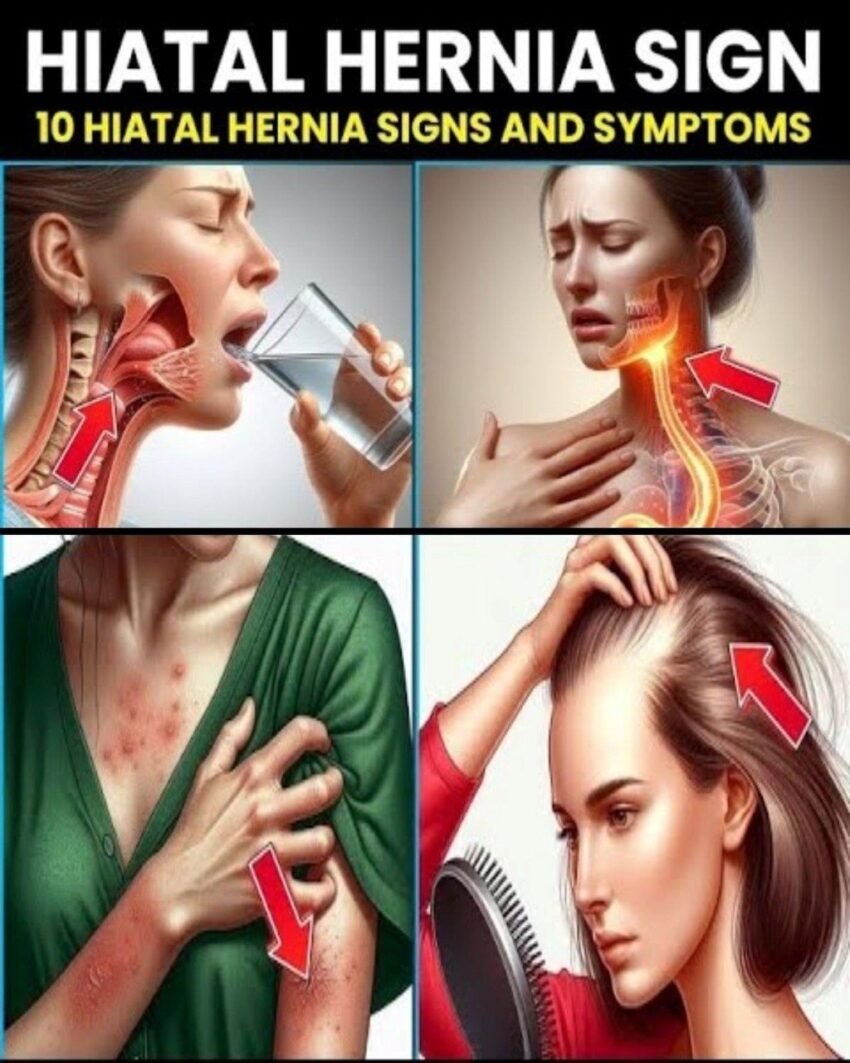
A hiatal hernia doesn’t always cause symptoms, but when it does, they’re often mistaken for simple acidity or indigestion.
🩺 What is a hiatal hernia?
Hiatal hernia happens when part of the stomach pushes up through the diaphragm into the chest. This can affect how the lower esophageal valve works—leading to reflux-type symptoms.
⚠️ 10 Signs & Symptoms to watch for
🔥 1) Heartburn
- Burning feeling in chest, especially after meals or lying down
- One of the most common signs
🍽️ 2) Acid reflux
Gastroesophageal reflux disease
- Sour or bitter fluid coming up into the throat or mouth
😖 3) Chest pain
- Can mimic heart-related pain
- Usually worse after eating or bending over
🤢 4) Difficulty swallowing (dysphagia)
- Feeling like food is stuck in the chest
🌬️ 5) Shortness of breath
- Large hernias can press upward and affect breathing
🫁 6) Chronic cough or throat irritation
- Caused by acid irritating the airway
🗣️ 7) Hoarseness
- Especially in the morning due to acid exposure overnight
😓 8) Feeling full quickly
- Early satiety after small meals
🤮 9) Regurgitation
- Food or liquid coming back up without nausea
🩸 10) Iron deficiency anemia (less obvious)
- Slow bleeding from irritated stomach lining over time
⚠️ When symptoms get worse
Symptoms often increase:
- After large meals
- When lying down
- With bending or heavy lifting
🚨 When to seek medical help
- Severe or persistent chest pain
- Trouble swallowing that worsens
- Vomiting blood or black stools
- Unexplained weight loss
👍 What helps manage it
- Eat smaller meals
- Avoid lying down after eating
- Elevate head while sleeping
- Reduce trigger foods (spicy, fatty, caffeine)
- Maintain healthy weight
🧠 Bottom line
A hiatal hernia often shows up as persistent reflux, heartburn, and swallowing discomfort—but symptoms vary widely. Many people have it without knowing.
If you want, I can explain:
- Best sleeping positions for hiatal hernia
- Foods to avoid vs safe foods
- Or how it’s diagnosed and treated 👍
